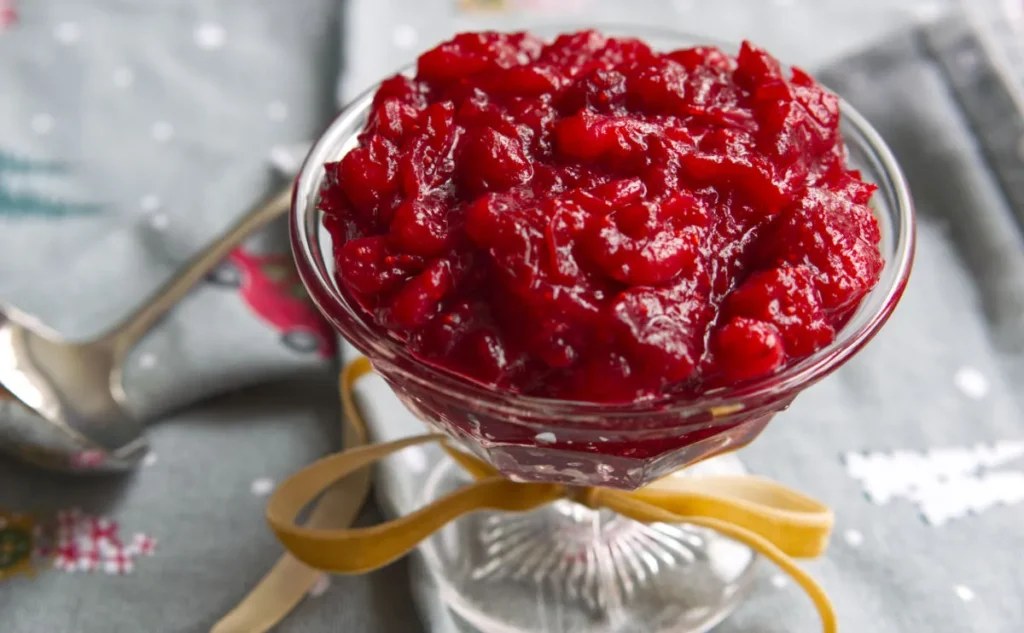
Ingredient: Cranberries
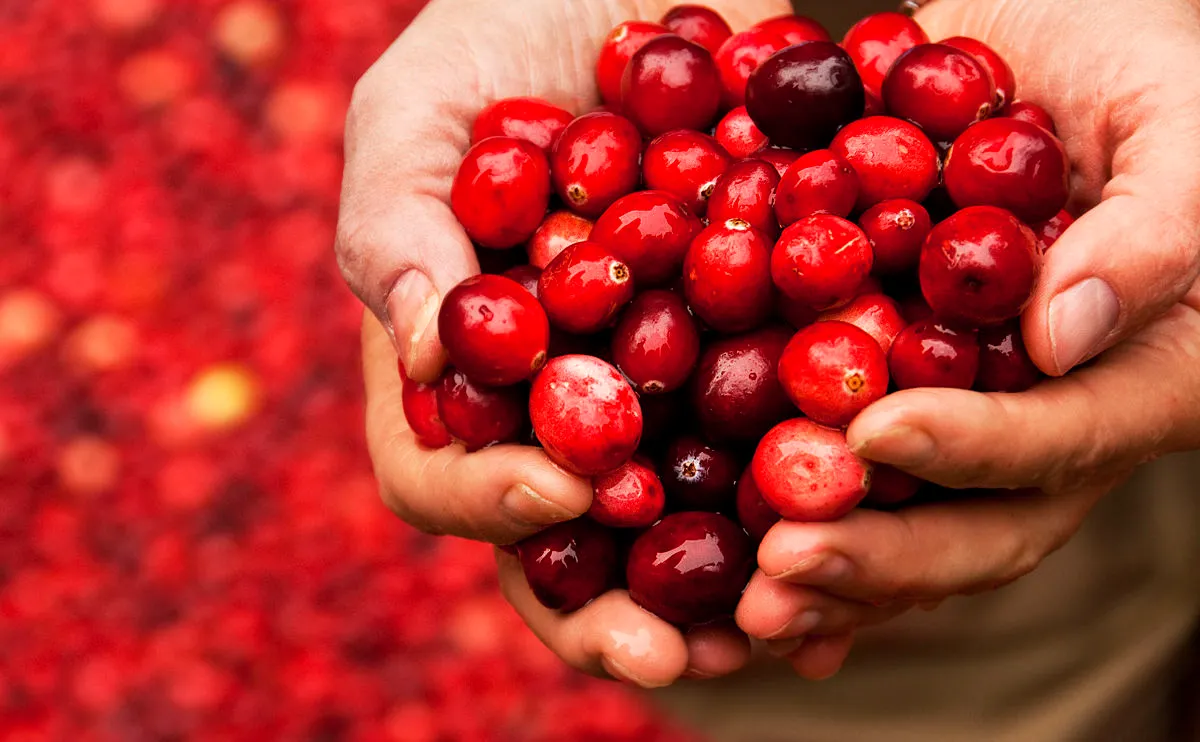
Don’t tell your kids this, as there could be chaos in the kitchen, but the way to tell if cranberries are ripe is the ‘bounce’ test. They have to bounce about 10cm, and if they don’t, they are no good to eat. It’s a test that is even used commercially.
This was originally discovered in 1880, when an American one-legged farmer from New Jersey, John “Peg Leg” Webb spilled his cranberries down the steps of his barn. He noticed ripe, healthy berries bounced down, to the bottom while damaged ones stayed where they were. Their bounciness is to do with tiny air pockets inside the fruit.
There’s some evidence that drinking cranberry juice can help reduce the risk of UTIs because of the Proanthocyanidins which help prevent certain bacteria (e.g. E. coli) from sticking to the urinary tract walls. But the evidence is mixed so your results may vary.
Cranberries are sour little nutrition powerhouses, with some useful nutrients such as vitamins C and K1, manganese and copper, low in calories, and containing antioxidants. You may not know that sugar toughens the skins while cooking, so if you cook them, add sugar right at the end. Use fresh or frozen cranberries to make cranberry sauce or add a handful of dried cranberries to a winter salad or instead of raisins in a cake or brownies.
Here are some recipes with Cranberries…