
Thinning hair? Why nutrition is the key to stronger, fuller growth

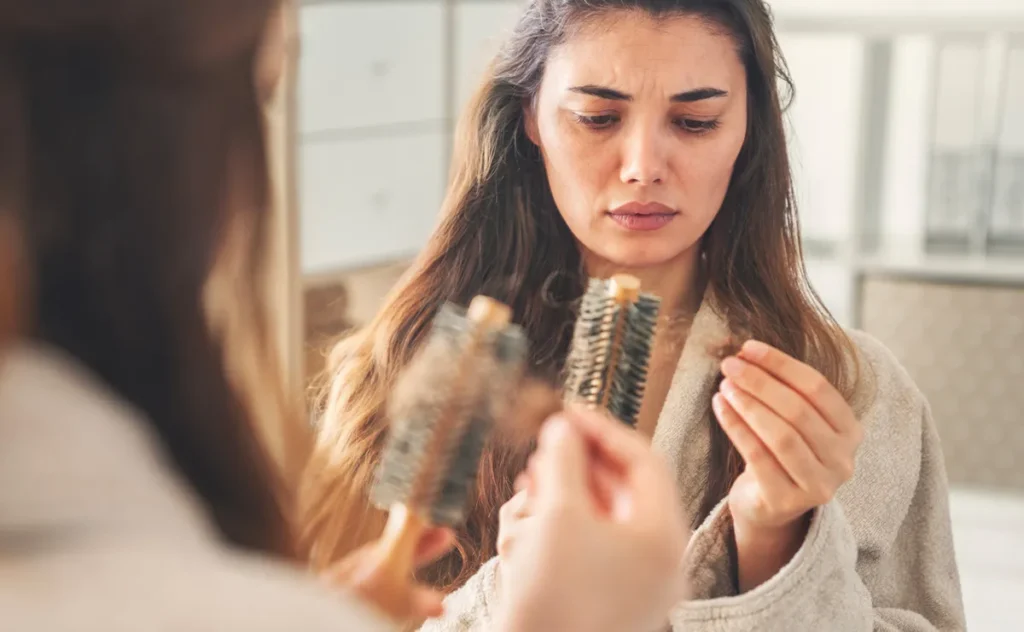
No shampoo can rescue hair that is thinning from the inside. But the good news is there are ways to strengthen it if you are finding handfuls of it in your hairbrush and clearing the plughole more often than ever. So many of us seem to be struggling with thinning hair, that you are far from the only woman facing this frustration.
I have had spells in my own life when hair loss was a real issue, with clumps coming out every time I brushed my hair, and my mother spent years trying to find ways to thicken her super-fine, wispy hair. What I learned is that even an expensive shampoo, conditioner or serum can only ever work on the outside. Your hair grows from the inside, so what you eat matters every bit as much as what you put on your scalp.
Get our lovely Healthy Bites newsletter!
Each week, you’ll get an amazing recipe, a useful health tip, and an ingredient to jazz up your shopping basket!
Why do women experience hair loss?
One of the most common patterns I see is a sudden bout of shedding that follows a shock or depletion to your system. This is known as Telogen Effluvium, a temporary form of hair loss that can last 3-6 months. That shock might be childbirth, perimenopause or menopause, a stressful stretch of life, a crash diet, an illness, a change in medication, or even coming off the contraceptive pill. It often shows up around three months after the trigger, which is why the cause is not always obvious at first.
Here is what it can look like:
- More hair than usual in your brush, on your pillow or around the plughole
- A parting that looks wider, or a ponytail that feels thinner
- Hair that snaps easily, looks dull, or has lost its bounce
- Slow regrowth, or new hairs that come through fine and wispy
- Tiredness, cold hands and feet, or brittle nails alongside the hair shedding
The good news is that this kind of shedding is usually temporary, and your hairdresser will probably spot new hair growing underneath. Once the underlying trigger is sorted, fuller hair growth tends to return. It does take time and patience, though, so please do not lose heart if you do not see a difference in the first few weeks.
My top clinical nutrition tips for stronger hair
These are the foundations I come back to again and again, whether my own hair is shedding more easily or I see the same pattern in a client or a friend. Give these nutrients a fair run of at least four to six months to bring your vitamin and mineral levels up to optimal. The hair growth cycle is slow and nutrition takes time to show its work. This groundwork pays off in the longer term, helping you build stronger hair that does not break or thin as readily, even if you go through another period of stress or depletion and life sends you curveballs.
Build your iron and ferritin stores. Ferritin is your stored iron, and it is the number in blood tests that I watch most closely when it comes to hair thickness and strength. In clinic, I like to see ferritin sitting comfortably between 70 and 100 for really strong growth, although research on an exact target for ferritin is mixed, so treat this as the level I aim for rather than a hard cut-off. Iron deficiency often comes alongside women who are shedding hair, so eat plenty of red meat, liver, eggs, beans and dark green vegetables. Add apricots and prunes for a plant boost, and supplement with a good-quality tummy-friendly iron supplement if a blood test shows your levels are flagging.
Pair iron with vitamin C. Vitamin C helps your gut take up iron from your food and is a simple trick that makes a real difference to how much iron you absorb. Vitamin C is also vital for strong hair because it boosts collagen production, which builds the structural protein of your hair strands. So add some raw red pepper, parsley, fresh tomato, berries or a squeeze of lemon to iron-rich meals – or eat a tangerine or some strawberries for pudding.
Top up your B vitamins. Vitamin B12 and folate work alongside iron to build healthy red blood cells and carry oxygen to your hair follicles. The levels I like to see for good hair growth are a B12 comfortably around 500-600 pg/mL and a folate of at least 14 ng/mL, which is at the middle to higher end of the standard lab ranges. You will find these nutrients in liver, red meat, eggs, green vegetables and pulses.
Get your vitamin D into a healthy range. Low vitamin D levels have been linked with several types of hair loss, and this fat soluble vitamin plays a part in the hair follicle cycle, so low levels often show up in people who are shedding hair quickly. Get out into the daylight from April to September, eat vitamin D rich foods like oily fish, whole organic milk and meat from grass-fed animals, and also take a supplement through the darker winter months.
Boost your silica. Silica supports the strength and structure of the hair shafts. Load your plate with cucumber, mango, green vegetables, pulses, celery and asparagus which all naturally contain silica. Nettle tea is another helpful addition to boost up silica. You can also take a silica supplement or drink a bottled water that is naturally rich in it.
Bring in collagen. Collagen provides the amino acids your body draws on to build your hair shafts and is a great way to bolster your protein intake if you struggle with eating enough protein. Food sources of collagen include sipping bone broth and fresh stock, and stirring a little marine or bovine collagen into your morning tea or smoothie to give yourself a collagen boost.
Mind your magnesium. Magnesium is involved in hundreds of processes in the body, hair growth being among them, and many of us run low in this vital mineral. Find it in nuts, seeds, dark leafy greens and a little good-quality dark chocolate. You can also supplement with a high-quality magnesium, such as magnesium bisglycinate, which has glycine bonds that support healthy membranes and connective tissue.
Include foods rich in biotin. Biotin supports keratin production, and you will find it naturally in eggs, liver, seafood, nuts, seeds and beans. It is also added to many multinutrient formulas as it is part of the B vitamin family. Keratin is a tough and fibrous structural protein that strengthens your hair, nails, and the outer layer of your skin.
Do not forget zinc. Zinc is one of the minerals I would not want to be falling short of when hair is thinning, because it helps build the hair shaft and keeps the follicle working well. Oysters and other shellfish are wonderful sources, along with red meat, pumpkin seeds, cashews and chickpeas. Ensure you have some zinc in your supplement stack if you are trying to rebuild strong thick locks.
When the basics are not enough
Sometimes you can do everything right with your diet and the hair shedding still carries on. When that happens, it is time to look a little deeper, because something underlying may be driving it. In clinic, these are the areas we can explore with you.
Your thyroid
An underactive thyroid or autoimmune thyroid condition is one of the classic hidden causes, and hair loss is often one of the very first signs of the thyroid being out of sync, along with feeling cold, tired and gaining weight. I suggest a full thyroid panel, including thyroid antibodies, if you are not getting to the root of your hair loss. This helps ensure autoimmune conditions such as Hashimoto’s are not missed, especially if you have any of these symptoms alongside the hair loss.
Coeliac disease
Coeliac disease is an autoimmune condition of the gut, triggered by a combination of genetics and eating gluten, and it drives poor absorption of the very nutrients your hair depends on. A simple blood test can screen for it, so it is well worth ruling out if your hair is not responding to eating good-quality food.
Your gut health
If your gut is inflamed, you are not making enough digestive juices, or you have picked up a parasite while travelling, you can eat beautifully and still absorb very little of the good stuff, such as iron, B vitamins and vitamin D. Over time that leads to nutrient shortfalls and more food sensitivities, and it can set the scene for autoimmunity. A stool microbiome and gut function test, arranged through a NatureDoc practitioner, helps you see whether this is part of your picture, so we can settle the inflammation, restore your gut health and help you extract more goodness from your food.
Round Up
Thinning, fragile, falling hair is upsetting, and I know how disheartening it feels to watch once-thick hair look scanty in the mirror. The reassuring part is that hair loss is one of the most responsive things to good nutrition, and small, consistent changes really do add up. If you are feeling depleted and tired, build up your iron, B12 and vitamin D. Add silica, collagen, magnesium, zinc and biotin to strengthen your hair, and give the process a good four to six months. You should notice less hair coming away in your brush well before you see the fullness returning.
If you have been doing the basics and your hair is still shedding, there is usually a reason, and it is worth finding. My clinical team would be glad to help you get to the bottom of it, with the right tests and a plan built around you. Book a consultation with the NatureDoc clinical team whenever you feel ready. And if you know a friend, sister or colleague who is quietly worrying about her hair, do share this with her.
Ask me what supplements can help… make a booking, or anything else!
References
- Telogen Effluvium
- Iron deficiency in female pattern hair loss, chronic telogen effluvium, and control groups
- The diagnosis and treatment of iron deficiency and its potential relationship to hair loss
- Evaluation of MCV/RDW ratio and correlations with ferritin in telogen effluvium patients
- Telogen effluvium in daily practice: patient characteristics, laboratory parameters, and treatment modalities of 3028 patients
- Retrospective review of 2851 female patients with telogen effluvium: a single-center experience
- Management of hair loss in women
- Iron absorption: factors, limitations, and improvement methods
- Role of vitamin D in hair loss: a short review
- Vitamin D and the skin: an update for dermatologists
- Serum vitamin D3 level in patients with female pattern hair loss
- Serum 25-hydroxyvitamin D levels in alopecia areata, female pattern hair loss, and male androgenetic alopecia in a Chinese population
- Serum zinc concentration in patients with alopecia areata
- Role of zinc in chronic telogen effluvium in serum and hair of patients with alopecia
- Zinc status in Kurdish adults with hair loss
- A review of the use of biotin for hair loss
- The role of vitamins and minerals in hair loss: a review
- Role of nutritional supplements in selected dermatological disorders: a review
- Dietary influences on skin health in common dermatological disorders
- An overview of the genetic aspects of hair loss and its connection with nutrition
- Impact of thyroid dysfunction on hair disorders
- Is thyroid dysfunction a common cause of telogen effluvium? A retrospective study
Responses