
Juvenile Spring Eruption – the reason kids get itchy ears in Spring

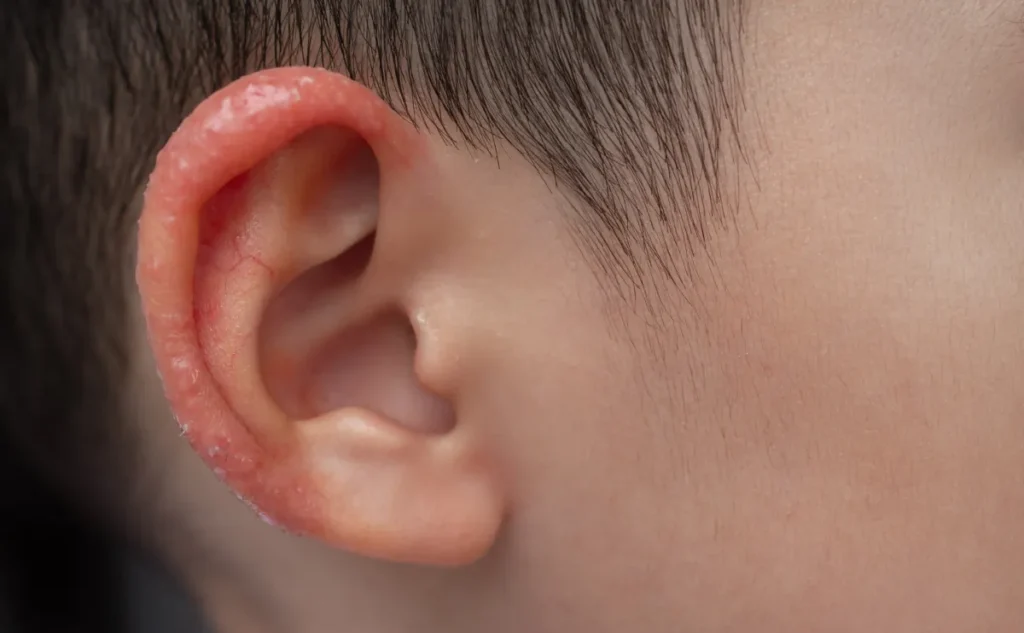
Does your child come home from school on a sunny spring day with ears that are red, swollen and covered in tiny blisters? Do they look like they have been stung by nettles or caught by the sun, even though they have barely been outside? If this happens year after year when the weather warms up, your child could be dealing with a surprisingly common condition called Juvenile Spring Eruption.
I see this in my clinic more often than you might expect, and it catches so many parents off guard. The good news is that once you understand what is going on, there are some simple nutritional strategies that can make a real difference. Let me walk you through what this condition actually is, why it happens, and what you can do about it right now.
Juvenile Spring Eruption, also known as Seasonal Affective Dermatitis, is a skin condition that usually only affects children and teenagers. Typically, it occurs in the early spring and summer months, and Juvenile Spring Eruption presents as red, itchy and swollen skin, usually on the outer ear. This usually looks like a nettle rash at first, and then it can then crust over. It usually goes away on its own quite quickly, within a week or two, but some kids get it worse than others.
Get our lovely Healthy Bites newsletter!
Each week, you’ll get an amazing recipe, a useful health tip, and an ingredient to jazz up your shopping basket!
Causes of Juvenile Spring Eruption
While the exact cause of Juvenile Spring Eruption is not yet fully understood, it is believed to be an allergic reaction caused by a combination of environmental factors, such as being photosensitive to sun exposure, as well as reactive to allergens like pollen. The condition is more common in children and teens with a predisposition to develop allergic conditions like asthma, eczema and allergic rhinitis.
UVA rays from the sun can provoke the symptoms, and so avoiding sun exposure can help, but confusingly, applying sun cream to the ears may not help. The photosensitivity can be so heightened that the itchy rash can appear even after mild sun exposure through a glass window or very thin clothing. So this is why standard sun creams, which usually don’t protect that well against UVA rays, often don’t prevent a reaction in the kids who are sensitive to the sun.
Histamine, a compound released by the body in response to allergens, is thought to play a significant role in the development of Juvenile Spring Eruption. A buildup of histamine can cause itching, redness and swelling, all of which are characteristic symptoms of Juvenile Spring Eruption. The outer ear’s sensitive skin and thin cartilage make it especially susceptible to the effects of excess histamine, leading to inflammation and discomfort.
Nutritional support for the itch and inflammation
Vitamin D
Research shows that children with lower vitamin D levels may be more susceptible to allergic conditions, including skin reactions such as Juvenile Spring Eruption. Vitamin D helps to regulate how the immune system responds to allergens, and after a long dark winter, levels are often at their lowest just as the spring sunshine starts to trigger symptoms.
I always recommend that parents get their child’s Vitamin D levels tested in early springtime, and if their levels are low, a good quality Vitamin D3 supplement can help to support their immune response. I find most kids benefit from 400iu – 1,000iu (10ug – 25ug) daily during March and April.
Vitamin C
Vitamin C is one of my favourite nutrients for children who are prone to allergic reactions. Studies show it can help to reduce histamine levels in the body and lessen the severity of allergic responses. For a child dealing with Juvenile Spring Eruption, this is particularly relevant because it works on the underlying histamine load rather than just masking the symptoms.
You can increase your child’s Vitamin C intake through food by offering plenty of citrus fruits, strawberries, red and yellow peppers, broccoli, kiwi fruit and fresh parsley. But during a flare, food sources alone may not provide enough vitamin C.
The upper tolerable limits for daily Vitamin C supplementation during a histamine flare are roughly 400mg for children aged one to three years old, 650mg for children aged four to eight, 1,200mg for children aged nine to thirteen, and 1,800mg for teenagers up to eighteen. To put that into perspective, one medium orange contains around 60mg of Vitamin C, so you can see why a vitamin C supplement can be helpful during a reaction, as it is hard to give them that many oranges!
Quercetin
Quercetin is a plant compound that I use frequently in the clinic alongside Vitamin C. It is a flavonoid with strong antioxidant and anti-inflammatory properties, and research suggests it can help stabilise the mast cells that release histamine, reducing the overall allergic response.
The wonderful thing about Quercetin is that it is found in everyday foods. These include apples, red onions, red peppers, pea shoots, and lamb’s lettuce, all rich sources of quercetin. I often suggest parents give their child some crunchy raw red pepper batons or stir some finely diced red onion into a pasta sauce. Small, consistent changes like these can build up your child’s Quercetin intake over the spring months.
For children who need additional support during an itchy flare, Quercetin is also available as a supplement, and I recommend 250mg twice daily while the ears are itchy and red.
Round up
If your child gets sore, itchy, blistered ears every spring, it is worth considering whether it is Juvenile Spring Eruption. This is a condition that responds well to targeted nutritional support, particularly Vitamin D and C as well as Quercetin, alongside some practical steps to reduce their UVA exposure.
If your child is struggling with this or any other allergic skin condition, our NatureDoc clinical team would love to help them. You can book a consultation to get a personalised plan tailored to your child’s specific needs.
And if you know another family dealing with mysterious ear rashes every spring, please do share this blog with them. Sometimes, just knowing there is a name for it and that something can be done to ease the itch and inflammation makes all the difference.
Ask me what supplements can help… make a booking, or anything else!
References
- Juvenile spring eruption: an outbreak report and systematic review of the literature
- Juvenile spring eruption: clinicopathologic features and phototesting results in 4 cases
- Juvenile Spring Eruption: Twice is Not Nice
- Vitamin D and Immunological Patterns of Allergic Diseases in Children
- Vitamin D and allergic diseases
- Vitamin D level is inversely related to allergen sensitization for risking atopic dermatitis in early childhood
- The impact of Vitamin D deficiency on asthma, allergic rhinitis and wheezing in children: An emerging public health problem
- Vitamin D levels and food and environmental allergies in the United States: results from the National Health and Nutrition Examination Survey 2005-2006
- Intravenous vitamin C in the treatment of allergies: an interim subgroup analysis of a long-term observational study
- The effects of vitamin C on respiratory, allergic and immunological diseases: an experimental and clinical-based review
- Vitamin C in Allergy Mechanisms and for Managing Allergic Diseases: A Narrative Review
- Quercetin Is More Effective than Cromolyn in Blocking Human Mast Cell Cytokine Release and Inhibits Contact Dermatitis and Photosensitivity in Humans
- Mucosal mast cells. III. Effect of quercetin and other flavonoids on antigen-induced histamine secretion from rat intestinal mast cells
- Quercetin inhibits histamine-induced calcium influx in human keratinocyte via histamine H4 receptors
- Quercetin Attenuates MRGPRX2-Mediated Mast Cell Degranulation via the MyD88/IKK/NF-κB and PI3K/AKT/ Rac1/Cdc42 Pathway
NB. This post has been updated and improved from the one originally published 23/4/2023.
Responses