
Why your child’s dyslexia or ADHD might really be a vision problem

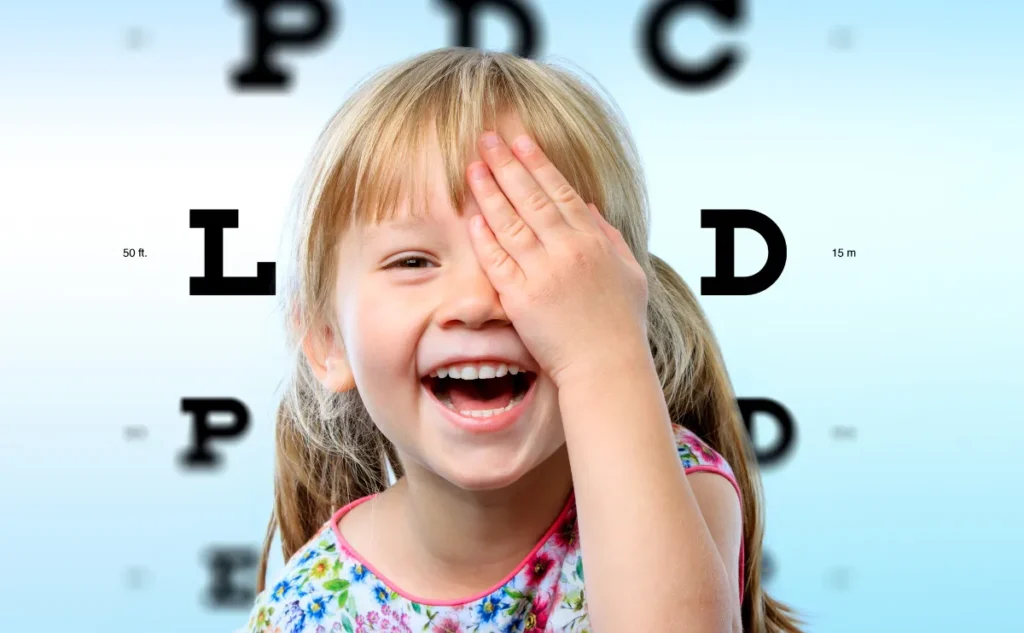
If your child struggles to read, avoids homework, loses their place on the page, fidgets constantly or melts down over schoolwork, it’s easy to assume the problem starts and ends with attention, behaviour or learning differences.
But for some children, vision is a piece of the puzzle that might be getting overlooked entirely. And as I recently learned from spending five days at neuro-optometrist Dr Bryce Appelbaum’s MyVisionFirst clinic in Maryland, vision is not the same thing as eyesight.
Vision is how the brain processes what we see and plays a major role in learning, focus, emotional regulation and confidence. Many children and adults can have perfect 20/20 eyesight and still struggle with significant vision processing problems that affect how their brain interprets the world around them.
For children diagnosed with dyslexia, dyspraxia, ADHD or autism, understanding the brain-eye connection can sometimes be transformative.
Get our lovely Healthy Bites newsletter!
Each week, you’ll get an amazing recipe, a useful health tip, and an ingredient to jazz up your shopping basket!
Vision is far more than just seeing clearly
Most of us assume that if a child passes a standard eye test, then their vision is fine. But what the optician is usually testing is the ability to distinguish details clearly, whether that is reading letters on an eye chart or seeing the whiteboard at school. Vision, however, is also about how the brain coordinates, processes and interprets the information coming in through the eyes. It is our most dominant sense by far, with an estimated 50% of the brain’s cortex devoted to processing visual information. The eye can even be said to be a part of the brain, albeit one that sits outside of the skull. In fact, the retina develops from the same tissue as the brain during early pregnancy, and the optic nerve is not a typical peripheral nerve, but a tract of the central nervous system that connects the retina to the brain.
Experts estimate that over 80% of what an average child learns in school comes in through their visual system. Reading alone requires huge amounts of neurological teamwork. The eyes need to track accurately across the page, focus clearly, work together as a coordinated pair and rapidly send reliable information back to the brain for interpretation and comprehension. As Dr Appelbaum describes it, reading is “the most complex neurological task that we ask developing brains to engage with.” When even one part of that system is struggling, learning can quickly become exhausting.
How vision problems can look like ADHD or dyslexia
If a child’s eyes are not coordinating properly, reading may feel physically uncomfortable rather than simply “difficult”. Some children experience convergence insufficiency, where the eyes struggle to work together at close range, creating double vision, headaches or significant visual fatigue. Others may have oculomotor dysfunction, where words appear to jump around the page or tracking from one line to the next becomes tiring. Imagine trying to concentrate in class when the words will not stay still. Many children cannot explain what they are experiencing because they assume everyone sees the world the same way they do. But all parents and teachers often notice are the knock-on effects:
- Fidgeting and squirming
- Poor concentration
- Emotional outbursts around homework
- Avoidance of reading
- Using a finger to follow text
- Losing their place while reading
- Tilting the head or covering one eye
- Fatigue after school
- Difficulty maintaining eye contact
It is not difficult to see how these behaviours can overlap with ADHD-type symptoms or learning difficulties. This does not mean that dyslexia, ADHD or autism are “caused” by vision problems. Neurodivergence is complex and multifactorial. However, visual difficulties can absolutely contribute to attention struggles, reading fatigue and emotional overwhelm, particularly in classroom settings where visual demand is constant.
A simple at-home visual tracking test
For children aged around seven and a half years and older, Dr Appelbaum recommends trying a simple tracking exercise using a pencil. Hold the pencil roughly 14 inches away from your child and slowly move it side to side across their midline, perhaps then into a circle or figure eight pattern. Ideally, by this age, the eyes should move smoothly and accurately without excessive head movement. You can also slowly move the pencil towards the nose while observing whether both eyes comfortably converge together. Dr Appelbaum says there is a high correlation with convergence insufficiency and ADD or ADHD type behaviours.
Of course, this is not a diagnostic tool, but it may help identify whether a more detailed functional vision assessment could be worthwhile.
Dr Appelbaum’s own story
Dr Appelbaum speaks from personal as well as professional experience. As a young child, he was, as he puts it “a mess.” He had an alternating eye turn and unusually, amblyopia or “lazy eye” where both eyes were affected. He also had major visual development delays. He was hopeless in the classroom and out of it. He retreated into his shell. However, he had the good fortune to be born to a father who was a developmental optometrist and a mother who was an occupational therapist. His father established that young Bryce had trouble focusing, poor depth perception and poor oculomotor function. Between them, they helped him to get his visual system functioning correctly, at which point he started to excel academically and went on to become an athletic star. His confidence soared and he made friends. History was to repeat itself with his own three children (twins of 11 and a daughter of 8), all of whom now have optimal vision and none of whom wear glasses. His twins are the only children in their year not to have phones and are on screens for a maximum of 30 minutes a day, and then only if they have spent time outside.
There are many aspects to Dr Appelbaum’s work and as I discovered, after a thorough evaluation, Vision Performance Training is tailored to the individual. At the more basic end, there are exercises to train eye movements, focus and eye teaming. There are also targeted exercises to build visual stamina, flexibility and precision and to improve integration with our other senses: touch, sound and movement; as well as our vestibular systems. This improves balance, motion tolerance and spatial orientation. Shortly after my own five-day Vision Performance Training week, during which I managed to improve both my long and short-sight, despite being 54, I read a whole book on a long car journey through France. Previously, I couldn’t type a text on my phone without feeling sick. Given the far-reaching impact of vision, it is unsurprising to learn about the range of people Dr Appelbaum and his clinical team have helped, from stroke victims to professional athletes in every sport imaginable wanting to gain an edge to their game.
Although it won’t be practical for most to travel to the US to benefit from Dr Appelbaum’s unique approach, the good news is that we can all do a lot, both for ourselves, and our children, to keep our vision and eyesight in tip-top condition.
Why modern childhood is putting visual systems under pressure
Children’s visual environments have changed dramatically in the past ten years. Whereas children used to have to be dragged inside in the evening, now most have to be dragged outside, such is the lure and habituation to screens. Staring at a screen which emits blue light, at a fixed distance from the face, creates visual stress on the eye-brain connection. Clench your fist and try keeping it clenched for 5, 10, 20 minutes. The demand on your eye muscles and specifically the accommodative system (eye focusing) is comparable. Contrast this with playing a ball game outside, when your eyes are darting all over the place and your brain has to rapidly process the information to play the game.
Activities that strengthen the brain-eye connection
Using your eyes as they evolved to be used helps to train the eye-brain connection. That means real-world activities rather than passive screen-based ones. Sports and games like football, tennis, or lacrosse constantly challenge hand-eye coordination, depth perception and rapid visual tracking, because the eyes must follow moving objects while the brain predicts where they will go next. Going out for a walk or simply playing outside naturally mean our eyes flit from near and adjust to light changes as we navigate uneven terrain, enhancing proprioception and prevented fixed focus. Indoor activities can be excellent as well: learning a musical instrument strengthens the brain’s timing, attention, and multisensory integration, because children must coordinate what they see on a page, what they hear, and what their hands do in real time. Chess and similar strategy games build visual attention and pattern recognition..
The key is variety, movement and real-world visual experiences rather than prolonged passive screen use.
Why sunlight matters
Exposure to sunlight is vital, particularly in the first years of life when the eyes are developing rapidly, and this is well-evidenced in the scientific literature. Myopia is reaching near epidemic proportions, and genetics only go a small way to accounting for this. At the time of the moon landing in 1969, around 25% of Americans were short-sighted. The figure is now in the mid-40s and by 2050, it is thought that nearly 50% of the global population will be short-sighted. In South Korea, the figure for 18-year-olds already exceeds 90%. This is largely attributable to the huge increase in close work indoors, whether on a screen or off.
Light is one of the most powerful regulators of a child’s brain and visual system, because eyes are constantly sending light information to the brain to set sleep, alertness, and daily body rhythms. Getting outside into natural daylight, especially in the morning helps strengthen these biological rhythms and supports healthy sleep, attention, hormones and circadian rhythm regulation and mood. In contrast, long periods of indoor screen use late in the day can keep the brain in a more “daytime alert” state and delay the natural release of melatonin, which can make it harder for children and people of all ages to fall asleep and get the rest they need. A good night’s sleep feeds back into better learning and focus the following day. In short, children need plenty of time outdoors during the day, and calmer, lower-light, screen-limited evenings. If you are interested in blue-blocking glasses, Dr Appelbaum counsels to make sure they are actually doing the job and filtering out the right wavelengths. He mentioned True Dark and Ocushield (UK based) as reliable brands. Dim the lighting in bedrooms and use warm, low-Kelvin bulbs.
Nutrients that support eye health
Just like the rest of the nervous system, the visual system is highly metabolically active and relies heavily on good nutrition
Antioxidants
Macular carotenoids are natural pigments found in the centre of the retina, in a region called the macula, which is responsible for sharp central vision. The main ones are lutein, zeaxanthin and astaxanthin, which act like a filter in the eye by absorbing UV light; essentially acting as internal blue light protection. They also work as antioxidants, helping to reduce the damage cause by oxidative stress and potentially helping with visual clarity and contrast sensitivity. The body can’t make these substances, so they need to come from what we eat: foods like leafy green vegetables, fish, sweetcorn, and eggs. Higher levels of these pigments are linked in research to better retinal health and may be associated with a lower risk of age-related macular degeneration, though results vary across studies.
Omega-3 fatty acids
Omega-3 fats (especially DHA and EPA) are important for children’s brain and eye development because DHA is a building block of the retina and the brain. Adequate intake is particularly important during pregnancy, infancy, and early childhood, when the visual system and brain are developing rapidly. For most of us, at least 2-3 portions of oily fish per week should meet our needs. Good options include salmon, sardines, mackerel, or trout. If you or your child doesn’t eat fish, omega-3s can also come from fortified eggs or plant sources (e.g. flax, chia, walnuts), although these contain something called alpha-linolenic acid (ALA), which then has to be converted into DHA and EPA, and this conversion is inefficient in humans. If you are concerned about not enough dietary intake, daily supplementation is an option.
Vitamin A
Vitamin A allows the retina to detect light properly (especially in low light/night vision) and helps keep the surface of the eye healthy and protected. It comes from animal foods including eggs, dairy and liver as well as orange and dark green vegetables such as carrots, squash, sweet potatoes and spinach, where it is present as beta-carotene that the body partly converts into active vitamin A. Most of us should get enough from our food, and supplementation is usually not needed unless there is a medical or dietary risk of deficiency. Importantly, vitamin A is fat-soluble, so excess intake can build up in the body and become harmful, it should not be given as a supplement routinely, although it is a key nutrient for vision development and corneal health; more is not better.
Other nutrients to be aware of
Iron, zinc, vitamin D, and B vitamins all play supporting roles in children’s brain and visual development, mainly by keeping the nervous system, oxygen supply, and cellular energy processes working properly. Iron, for example, is crucial for carrying oxygen in the blood and supporting brain function, and a deficiency in children is linked with tiredness, reduced attention, and poorer cognitive performance, which can indirectly affect learning and visual processing. Good sources include meat, beans, and lentils.
Zinc helps the body use vitamin A properly in the retina, thereby supporting normal night vision and eye function, and is found in foods like meat, dairy, eggs, and whole grains.
Vitamin D supports brain development, immune function, and overall neurological health and is mainly converted from sunlight exposure with additional intake from oily fish and fortified foods.
B vitamins (especially B12 and folate) are essential for healthy nerve function and brain development, including the optic nerve pathways that transmit visual information, and are found in animal products for B12 and leafy greens and legumes for folate.
For most children, a nutrient-dense, balanced diet should provide the majority of these nutrients naturally.
Dr Appelbaum’s top tips for protecting your child’s vision
Follow the 20/20/20 rule
Every 20 minutes, encourage your child to look away from their screen and/or desk work at something at least 20 feet away for at least 20 seconds. This helps relax the eye muscles and reduce visual strain.
Prioritise outdoor time every day
Dr Appelbaum strongly believes outdoor play is one of the best things parents can encourage for healthy visual development. Natural light, distance viewing and movement all support healthier brain-eye function.
“Eye push-ups”
Cover one eye, bring a finger slowly towards your nose until it gets blurry. Make it clear. Hold for five seconds. Look into the far distance, softly for five seconds. Repeat with the other eye. Dr Appelbaum describes this as the single most important exercise for developing stamina and flexibility for your focusing system.
Create calmer evenings
Dim lighting, warmer low-Kelvin bulbs and reduced screen exposure in the evenings all help support healthier circadian rhythm regulation and melatonin production to support better sleep quality.
Be mindful of screen habits
The further away screens are held and the dimmer the setting, the better. Encourage good posture, regular breaks and plenty of movement throughout the day.
Dr Appelbaum’s screen time guidelines
- 0–18 months: ideally no screen exposure
- 18–24 months: maximum 30 minutes daily, focused on meaningful interaction such as video calls with family
- Ages 2–5 years: ideally no more than one hour daily
- Ages 6–10 years: maximum two hours daily with regular breaks, balanced with equal time outdoors
The broader message is clear: children’s brains and visual systems develop best through movement, natural sunlight, social connection and real-world experiences rather than prolonged passive screen use.
Round-up
When children struggle with reading, deskwork, concentration or emotional regulation, vision problems are rarely the first thing parents think about. Yet for many children, difficulties with visual tracking, eye coordination, eye focusing and/or visual processing may be quietly contributing to learning challenges that are otherwise being blamed entirely on behaviour or attention.
The encouraging news is that the visual system remains remarkably adaptable throughout childhood, and even into adulthood. Small daily habits such as more outdoor play, reducing visual stress, prioritising sleep and supporting nutritional health can all help strengthen the brain-eye connection over time.
And for some children, a more detailed functional vision assessment may finally provide answers that make reading, learning and everyday life feel far less overwhelming.
If this article has sparked questions about your child’s visual health, focus, or reading or learning struggles, you can learn more by visiting MyVisionFirst’s website. During Covid, when it struck him that screens were here to stay, even for young children, Dr Bryce Appelbaum developed his ScreenFit programme which he describes as “Vision Training Lite”. It is designed to help all of us mitigate the negative effects of so much time on screens, which may include headaches, brain fog, dry eyes, eye strain and intermittent blur.
ScreenFit Progamme and UK options
We’ve teamed up with Dr Appelbaum to get you a $200 discount, so visit ScreenFit, and use the code NATUREDOC at checkout.
We’ll earn a small amount from the link above, but there are also some UK options, if you would like a visual assessment for your child, although the following are not endorsed by NatureDoc and treatment may differ from that in Dr Appelbaum’s clinic.
Ask me what supplements can help… make a booking, or anything else!
References
- Association Between ADHD and Vision Problems: A Systematic Review and Meta‑Analysis
- Visual Disorders in Children With Attention‑Deficit Hyperactivity Disorder
- PubMed Article (PMID: 18852411)
- PubMed Article (PMID: 41801664)
- Visual Attention and Eye Movement Research in Dyslexia
- Differences in Eye Movements and Reading Problems in Dyslexic and Normal Children
- PubMed Article (PMID: 34142457)
- PMC Article on Vision / Eye Health Research
- Sharp Rise in Myopia Around the World
- Impact of Screen Time Reduction and Outdoor Activities on Myopia Progression in School‑Aged Children
- Outdoor Activity and Myopia Prevention Research
- Nutrition and Eye Health
- JAMA Ophthalmology Study on Myopia / Eye Health
- About AREDS and AREDS2 (Age‑Related Eye Disease Studies)
- JAMA Study on Nutrition and Vision Health
- Vitamin A — Consumer Fact Sheet
- Computer Vision Syndrome
Responses