
Why tummy bugs sweep through schools and how to protect your child

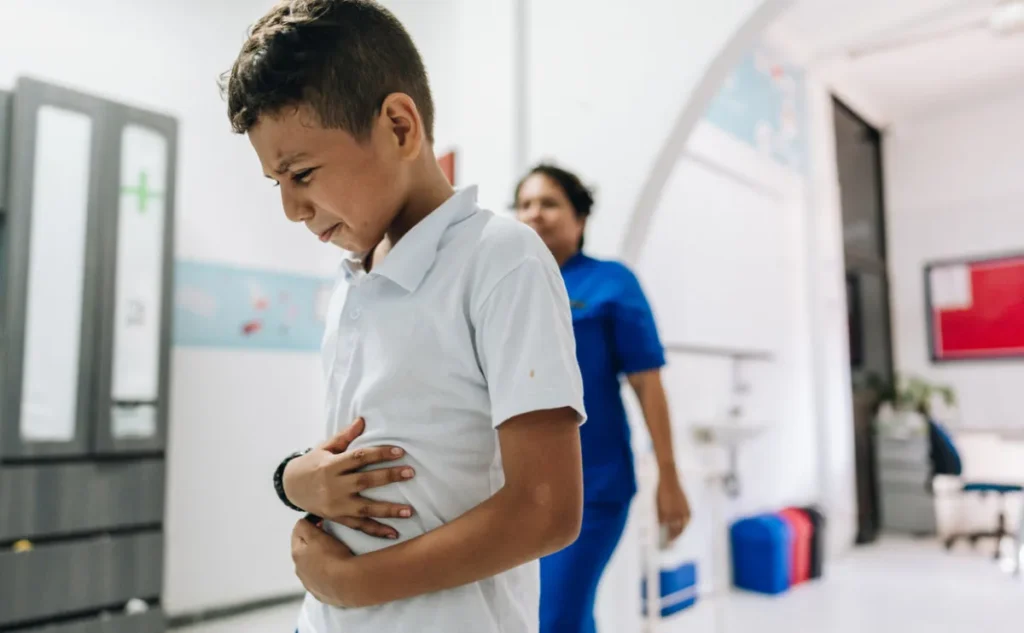
Tummy bugs can travel through schools like crazy, knocking everyone for six, and it can take ages for the kids, their parents and their teachers to get back on track. Every term I get the same messages from parents. Their child has been off twice in a fortnight with a tummy bug, the whole family has gone down with it, and everyone feels lousy and desperate not to catch another one. If this is you right now, read on!
The good news is that a handful of specific, easy habit changes can make a real difference, including proper handwashing and the right nutrition to support a healthy gut microbiome and strengthen your youngster’s defences against bugs. And remember, if your child keeps catching everything, or takes weeks to bounce back each time, then our NatureDoc clinical team are there for you and can dig into the reasons why.
Get our lovely Healthy Bites newsletter!
Each week, you’ll get an amazing recipe, a useful health tip, and an ingredient to jazz up your shopping basket!
Why do these tummy bugs spread so quickly?
Most diarrhoea and vomiting (D&V) tummy bugs are caused by viruses, such as norovirus. It takes remarkably few viral particles to infect your little one, and an unwell child can shed enormous numbers of them. Add the fact that the virus survives on hard surfaces and resists many everyday cleaning products, and you can see why school can be a soup of infections that can knock a child who has a flagging immune system.
There are three ways these particles spread: the faecal-oral route (picking noses, sucking fingers, difficulty wiping bottoms), airborne particles from projectile vomit, as well as contamination left behind on surfaces. When a child is sick in a classroom, fine droplets travel through the air and settle on tables, door handles and coat pegs several metres away. What makes things worse is shared bathrooms, coats crammed together, hands in the sand tray and the water play tray, and a classroom of children who have not yet mastered thorough handwashing. Symptoms appear 12 to 48 hours after exposure, and a child is contagious for hours before the symptoms appear. So by the time the first child goes home with a tummy bug, others have already picked it up. And worse than that, norovirus is still highly infectious for 48 hours after symptoms have stopped, so a child can be back at school after they think they have recovered, and infecting more kids.
Hand gel will not stop a tummy bug
What surprises most parents is that alcohol hand gel does not work against D&V viruses like norovirus, and that washing hands with soap and water is much more effective. This is because alcohol gels kill many germs by breaking apart a fatty outer layer, and norovirus does not have this layer. Soap and water lift the virus off the fingers and rinse it away, which is what you want.
So instead, here are your handwashing rules:
- Wash their hands with soap and warm water for at least 30 seconds. Remember to wash the thumbs, fingertips and between the fingers.
- Teach them to wash their hands on arrival at school and again as soon as they get home.
- Always wash hands before eating and after the loo.
- At home, give your child their own towel when anyone is unwell.
- Wash your own hands thoroughly after handling laundry, nappies or a bathroom clean up.
Lunchbox hygiene
Not every school tummy bug comes from another child. Some come from your child’s lunchbox. This is because your child’s packed lunch, if it is not kept cool, can sit at room temperature for four or five hours before they eat it, and bacteria thrive in warm conditions.
Here are your lunchbox rules:
- Pack a small ice block or a frozen drink carton alongside anything containing meat, fish, eggs or dairy.
- Take real care with leftover rice. You must cool cooked rice quickly, refrigerate it within an hour and eat it within a day. This is because Bacillus cereus spores survive cooking and, if the rice is left out, the bacteria can produce toxins that reheating may not destroy.
- Wash your child’s lunchbox and their water bottle daily in hot soapy water, since bottle lids harbour plenty of bacteria as well as mould spores.
- Ask your child not to share drink bottles or half-eaten snacks with their friends.
Build your child’s gut defences before the bugs arrive
Many of your child’s immune cells are in the lining of their gut, and a healthy, diverse and well-populated gut microbiome makes it harder for an invading bug to gain a foothold.
My first ports of call are kefir and live yoghurt, and they can be given at breakfast or as an after-school snack or pudding at the end of supper. Kefir contains a wider range of friendly bacteria than yoghurt, and you should look for brands of yoghurt and kefir that contain Lactobacillus and Bifidobacterium, as these are the strains of beneficial bacteria that are so vital for protection against bacterial and viral infections.
Serve kefir blended into a berry smoothie or live yoghurt with honey and fruit. Aim for a serving every day if your child is prone to tummy bugs. There are dairy-free yoghurts cultured with some live bacteria, but my tip for the dairy-free kids is to stir a live bacteria supplement into the plant-based yoghurt to supercharge it.
I always recommend a child takes a good quality live bacteria supplement daily for at least 4 weeks following a tummy bug (ideally 6 weeks) to repopulate the gut microbiome. You can start this once they have stopped being sick, towards the tail end of a tummy bug (or all the way through if they have a runny tummy). Pick a Lactobacillus and Bifidobacterium blend if they have had a D&V bug and Saccharomyces boulardii if they have just had the runs.
Remember to also feed your child’s gut bacteria with prebiotic foods. These include underripe bananas, onions, garlic, oats, baobab, cooked and cooled potato and pasta, which all provide the fibres your child’s own microbes live on.
Work on their gut lining
The gut lining harbours your child’s immune defences, and it needs feeding with the right nutrients to protect your child from bacterial and viral infections. Having a healthy gut lining also makes any inevitable infections more short-lived, with fewer symptoms.
If they have a sore, acidic tummy, then give them slippery elm and marshmallow root supplements, which will help to calm an inflamed gut and start to repair the gut lining. When their appetite comes back, feed them plenty of bone broth, ghee (clarified butter) and apple or pear puree to nourish the lining all the way along the gut.
The nutrients that repair the gut lining itself and help to support your child’s defences include zinc, vitamin A and vitamin D.
Zinc is found in seafood, fish, meat, dairy, nuts and seeds and is key for overall immunity. Fussy eaters and children who are small for their age are often low in zinc.
Vitamin A comes from yellow butter, creamy milk, oily fish and liver. Carrots, mangoes and sweet potatoes also provide beta-carotene, which the body converts to vitamin A. This is in most multivitamins as it is so vital for a child’s immune system.
Vitamin D is vital for British kids during the winter, as we don’t get enough sun. Playing outside in grey, cloudy weather sadly does not give them much vitamin D, so it is important to top them up. The NHS recommends every child over the age of four takes a vitamin D supplement from October to March each year, with all children aged one to four supplementing year-round.
Make sure these three are in your child’s multivitamin, or supplement them separately if they are prone to tummy bugs.
Round up
Unfortunately, tummy bugs will circulate this term no matter what you do, but there are a few simple things you can do to stop your child catching every single one and to strengthen them so they bounce back quickly afterwards!
Start with the handwashing, because it really does matter. Pack their lunchbox with an ice block and get kefir or live yoghurt into their diet most days. Remember to add a live bacteria supplement to support their gut health and immunity, especially if your child is prone to picking things up.
If your child still catches everything going, takes weeks to recover, or has loose stools that rumble on long after a bug has passed, something else is usually going on. Please book an appointment with our NatureDoc clinical team and we can run stool and nutrient testing to build a plan around your child. And do share this with a friend at the school gate.
Ask me what supplements can help… make a booking, or anything else!
References
- Infection control for norovirus
- Norwalk virus shedding after experimental human infection
- CDC Yellow Book: Norovirus — incubation period
- NHS inform: Norovirus
- Noroviruses: Evolutionary Dynamics, Epidemiology, Pathogenesis, and Vaccine Advances: A Comprehensive Review
- Norovirus as a foodborne disease hazard
- Reducing viral contamination from finger pads: handwashing is more effective than alcohol-based hand disinfectants
- Comparative efficacy of seven hand sanitizers against murine norovirus, feline calicivirus, and GII.4 norovirus
- Virucidal activity of three ethanol-based hand rubs against murine norovirus in a hand hygiene clinical simulation study
- UKHSA: Health protection in children and young people settings, including education
- Food Standards Agency: Home food fact checker
- NHS: Diarrhoea and vomiting
- Probiotics for prevention and treatment of diarrhea
- Feeding of Bifidobacterium bifidum and Streptococcus thermophilus to infants in hospital for prevention of diarrhoea and shedding of rotavirus
- Effect of a probiotic infant formula on infections in child care centers: comparison of two probiotic agents
- Bifidobacterium animalis subsp. lactis BB-12 in reducing the risk of infections in early childhood
- The efficacy of Lactobacillus reuteri DSM 17938 in infants and children: a review of the current evidence
- Kefir and Intestinal Microbiota Modulation: Implications in Human Health
- The Microbiota and Health Promoting Characteristics of the Fermented Beverage Kefir
- Randomized controlled trial of probiotics to reduce common cold in schoolchildren
- Vitamin A and vitamin D regulate the microbial complexity, barrier function and the mucosal immune responses to insure intestinal homeostasis
Responses