Ingredient: Baking Powder
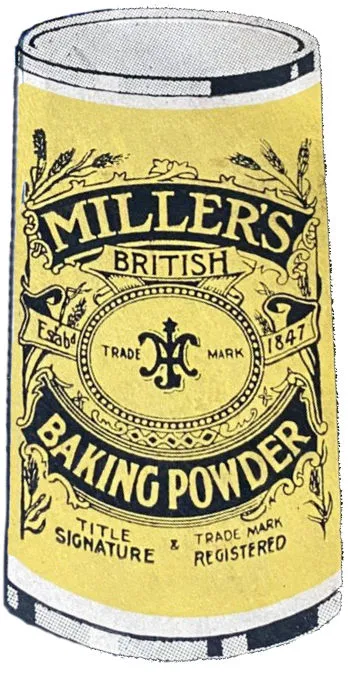 The invention of baking powder is usually attributed to Alfred Bird in Birmingham in 1843, but an ancestor of ours, Dr James Miller, also came up with it at a similar time in Manchester.
After graduating from Edinburgh University, Dr Miller set up in practice as a doctor in Manchester before receiving a letter from an old friend who had graduated with him from Edinburgh and was also in practice in the Manchester area. The friend reported that he and his partners were perplexed by a serious outbreak of stomach upsets afflicting many of their patients. Recalling that Dr Miller had done research and written a paper on the subject, his friend wondered whether he could help by paying him a visit. Always one to relish a challenge, James Miller agreed, soon identifying the cause of the problem as the widespread use of adulterated yeast, mostly imported from Germany and used in baking.
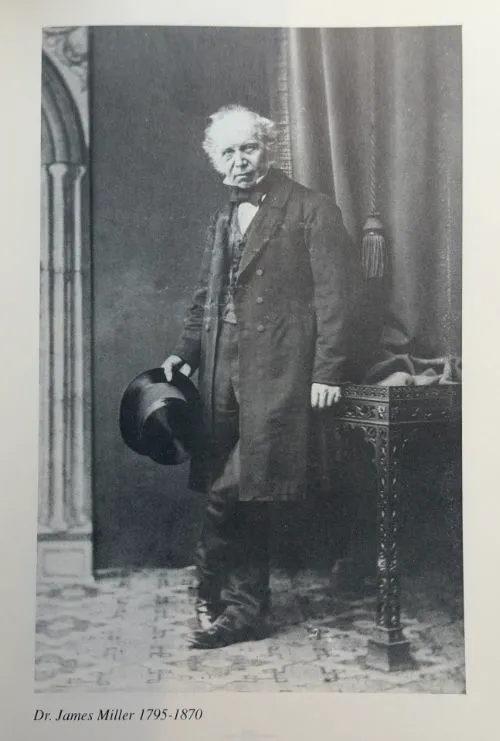 James Miller then experimented and found that the ‘lift’ required in baking bread and cakes could be achieved from a mixture of an acid (he used tartaric acid) and an alkali (bicarbonate of soda). To avoid premature reaction he introduced cornflour as a filler which protected the two active ingredients from moisture, allowing the reaction to take place only when liquid was introduced.
The novel baking powder was an immediate success. This led to an offer for James to join his friend’s medical practice, which after due consideration he did. The practice was soon inundated with requests for this new-found answer to stomach ailments. It quickly became apparent that the demand for what had become an essential food product rather than a medicine could only be satisfied by making the baking powder on a commercial scale away from the dispensary. As a professional man, James Miller was not too happy to move into business, but this is what happened.
According to family records, he first produced his baking powder in 1840, and the family firm was founded in 1847. James Miller trademarked the brand name ‘Miller’s British Baking Powder’ and in 1855 he purchased a house in Moreton Street, Strangeways, which he converted into a small factory. The business expanded, profits rose, and it was successful for many years until it fizzled out after the 2nd world war. The ‘baking powder’ name he gave it from the start has endured, while ‘Bird’s Fermenting Powder’ eventually was renamed as baking powder… probably because it was not doing any fermenting, so it was scientifically incorrect.
Recipes with Baking Powder…