
Ingredient: Cream Cheese
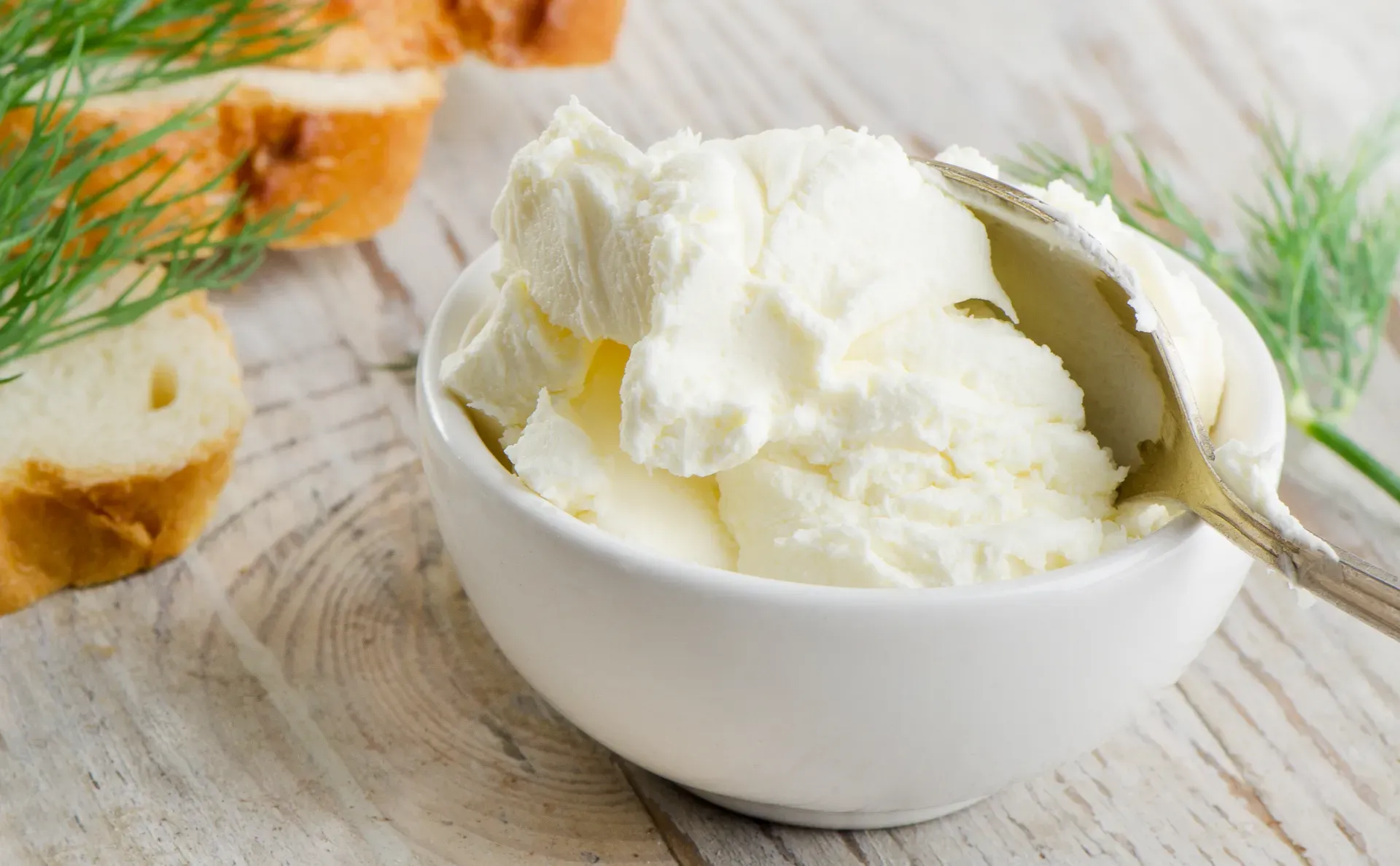
England was making cream cheese at least 400 years ago, long before it became associated with America. Gervase Markham’s 1615 housekeeping manual gives a recipe for “an excellent fresh Cheese” made by taking milk straight from the cow with cream, setting it with a spoonful of rennet, and draining the curd in a cloth, a fresh, soft cheese much the same as the tubs we buy now.
As a fresh cheese, cream cheese is made to be enjoyed young rather than aged, which is why it needs refrigeration and tends to be lower in histamine than mature cheeses. A good deal of the lactose drains away with the whey, so it’s lower in lactose than milk, and you still get vitamin A, some calcium and B12, handy if your kids won’t go near milk or anything strong-tasting. Most supermarkets sell their own version of cream cheese, often labelled soft cheese.
This is such a useful ingredient to keep in the fridge as you can use cream cheese in both sweet and savoury recipes. Spread it on toast with cucumber and yeast extract or with squished raspberries. Fill celery sticks with cream cheese and pop a few raisins on top or mix it with garlic and herbs to stuff chicken breasts. For cheesecake use full fat, out of the fridge a while before you start, and don’t over-beat it, as that’s what cracks the top.
Recipes with Cream Cheese…