

Ingredient: Carrots
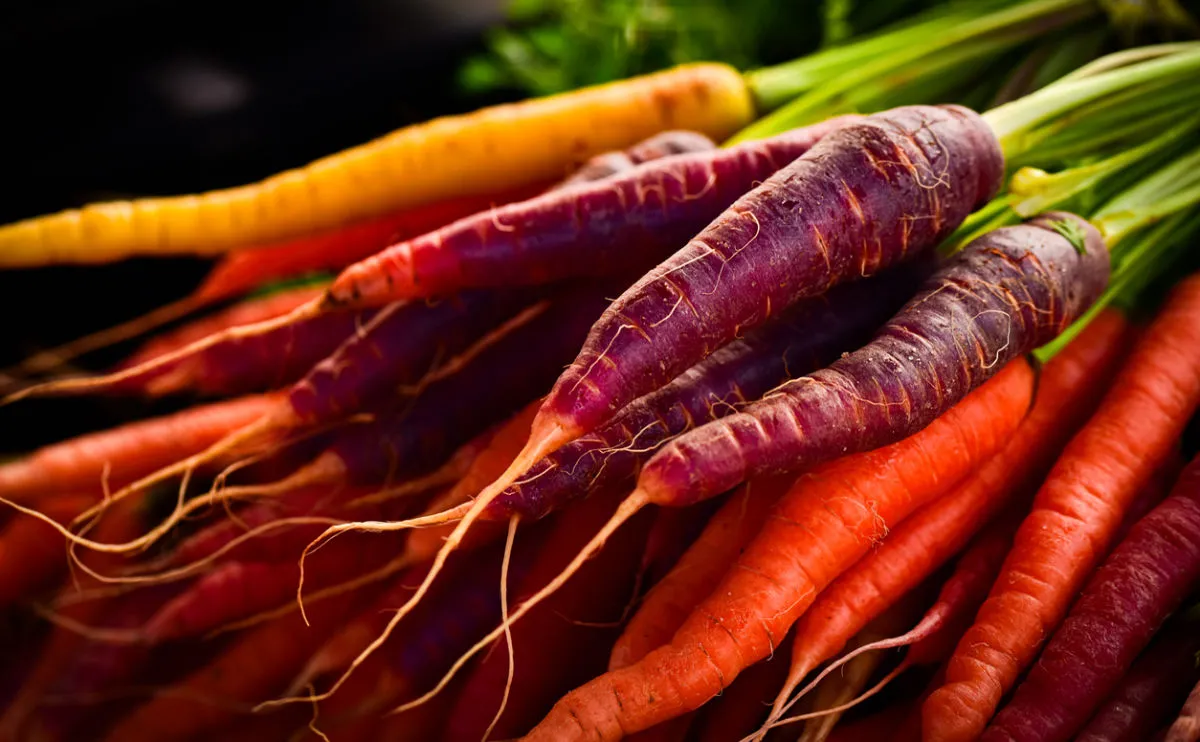
It’s hard to imagine that carrots were not orange until the 17th century. For centuries they were purple, yellow and white across Central Asia, before Dutch growers bred the orange variety we know today.
Sweet, earthy and easy to use, they are one of those vegetables most children will happily crunch on without too much persuasion. We often talk about eating the rainbow, and carrots make this very easy to do. The pigments in orange, purple and yellow contain different plant compounds that help feed your gut microbiome, and many children find the colourful ones fun to try too.
But orange carrots are richest in beta-carotene, which your body converts into vitamin A to support healthy eyes, skin and immunity. Vitamin A deficiency can cause night blindness, so there is (a little) truth to the story about them helping you see in the dark. Carrots also contain fibre, alongside potassium and vitamin K.
Roast them whole with olive oil and thyme until their edges turn sticky and caramelised, or blend into soup with ginger and coconut milk. They are lovely grated into salads, stirred into stews and pasta sauces, or served raw with houmous for an easy after-school snack.
Some recipes with carrots…