

Ingredient: Baobab powder
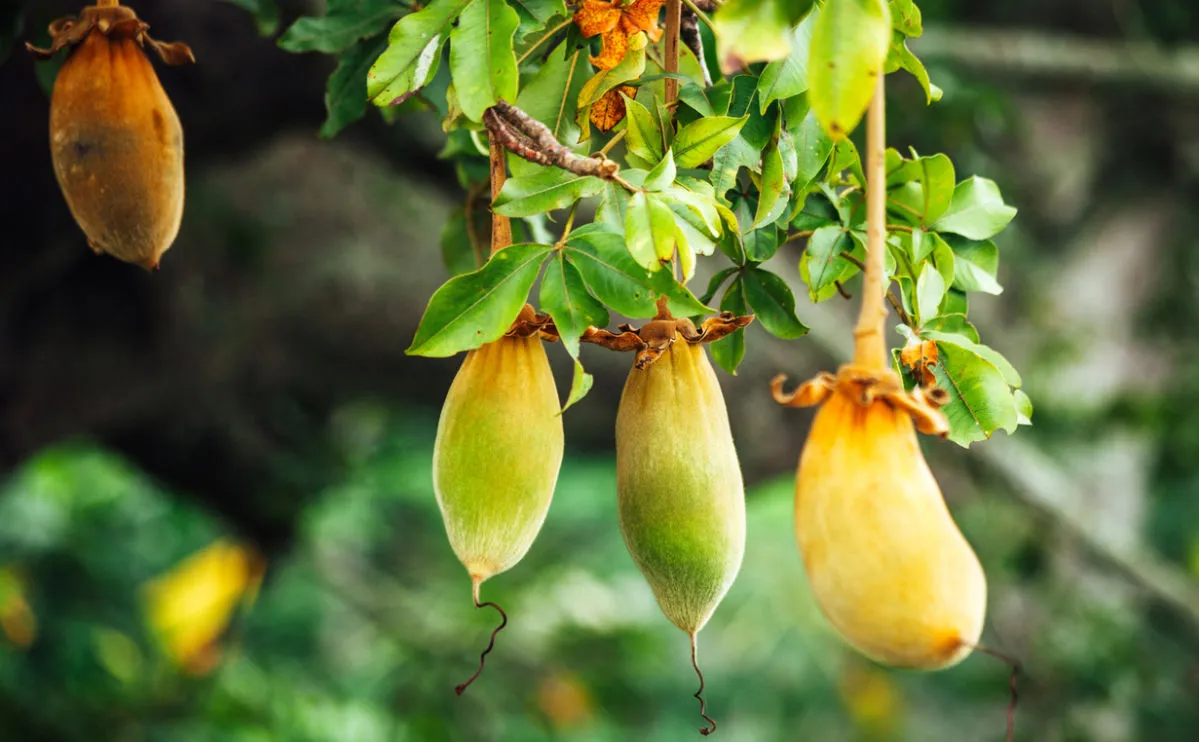
Known as the “Tree of Life”, some African baobab trees live for more than 2,000 years. Their trunks can grow so vast and hollow that one in Zimbabwe was even used as a bus shelter.
Shake a dry baobab fruit and you’ll hear the seeds rattling inside its velvety shell. That’s because the pale pulp dries and shrinks while the fruit is still hanging on the tree. Most baobab powder comes from fruit gathered from wild trees rather than plantations, often by women in rural communities. Once the pods fall, the dry pulp is removed and milled into a fine powder.
Nearly half of the baobab powder is fibre providing short chain fatty acids and it also feeds the diversity of good bacteria in your gut with prebiotics. It also has been found to reduce gut inflammation and to heal the gut lining, so it is a great support if you are working on your gut health. It also contains vitamin C, which supports your immune system and helps your body absorb iron, and is considered a low-histamine fruit.
Baobab has a tart citrus flavour, which is almost sherbet-like. The taste is somewhere between a grapefruit and a pear, with a faint caramel note. My children first tried baobab blended with mango at the Eden Project in Cornwall and loved it so much that we recreated the flavour at home as a fruit sorbet.
Stir a spoonful of baobab powder into your yoghurt, porridge or smoothie to give these a delicious citrus kick.
